1. Downtown Orlando draws more tourists
http://infoweb.newsbank.com.lp.hscl.ufl.edu/resources/doc/nb/news/15A8E7D711384F58?p=AWNB
In this article, it talks about the increasing amount of tourists that come to Orlando Florida. In the beautiful City of Orlando (my home town represent) there are many things for tourists to do there. Of course you have the attractions like Disney, Sea World, and Universal Studios, and also the Orlando City Soccer team. Not to mention the Orlando Magic (which we won't talk about their season any further) and the brand spankin' new Dr. Phillips Performing Arts Center! Yes in Orlando there are countless things to keep you occupied, it's almost overwhelming. That's where the problem comes in. The article talks about Downtown tours, which is genius because there is so much to do in Downtown the goes completely unnoticed. The article talks about one tourism company that takes guests through historical and culinary districts of Downtown Orlando. This lack of awareness in Downtown attractions can really hurt the economy and self-sustaining capability of the City Beautiful.
Opportunity: The Tourism market is in high demand and low supply in Orlando.
2. Millennials could have a big impact on presidential primaries
http://infoweb.newsbank.com.lp.hscl.ufl.edu/resources/doc/nb/news/15A93BD86748E280?p=AWNB
The topic of this article is the impact the Millennial generation could have on the presidential polls this year. The Millennials make up the largest living generation according to the U.S. Census bureau, numbering in at over 75.3 million. The issue at hand is whether they will decide to even show up to vote. A survey showed that only roughly 60% of Millennials who are registered to vote plan to vote in the election in November, and only about 30-40% plan to participate in the Republican and Democrat primaries. This raises an issue for not only the presidential candidates, but in all actuality, the entire country as well. If not everyone's voice is heard, then this country will not be able to run as efficiently as it could if a larger portion decided to vote.
Opportunity: There is a need for incentive to get the Millennial generation to go vote in the November election.
3. Millennials increase savings but fall short of target rate
http://infoweb.newsbank.com.lp.hscl.ufl.edu/resources/doc/nb/news/15A8E7D71F243AA0?p=AWNB
This article from the Orlando Sentinel informs us of the issue that, even though Millennials are indeed saving up for retirement, we still aren't at the target rate for which we should save. We fall short of the 15% savings rate that is advised by financial advisers and Fidelity for retirement. This issue is effecting the entire Millennial generation, if we don't save a sufficient amount of our income while we still have our youth, we are going to have to work longer into our adulthood.
Opportunity: There is a need for increased financial advising, especially in retirement funds.
4. Don't live beyond your means - Here are three money mistakes you may be making if you find yourself living paycheck to paycheck
http://infoweb.newsbank.com.lp.hscl.ufl.edu/resources/doc/nb/news/15A8E7D69FFE6E00?p=AWNB
This article brings to light what exactly can happen if you have poor spending habits. Many Americans are living paycheck to paycheck because they are spending more money than they are making. The issue here is that not enough people have taken the time nor the effort to create a financial plan or a budget. According to Northwestern Mutual's 2015 planning and Progress Study, only about 20% of adults have developed a written financial plan. This obviously has a negative effect on the lifestyle of the person in this situation. Living paycheck to paycheck can put a lot of stress on a person's mind, which leads to both physical, mental, and emotional harm. One big reason people don't seek financial help is because it can get quite pricey. Also, it can be tedious.
Opportunity: There is a high demand for an affordable yet effective financial help company.
5. How to avoid boredom, monotony in retirement
http://infoweb.newsbank.com.lp.hscl.ufl.edu/resources/doc/nb/news/15A8E7D61148BE60?p=AWNB
All of us (or at least most of us) dream of being able to retire one day, and just live a calm and simple rest of our lives. But something that we overlook is that after a life of working hard, once you retire, you get bored. This is obviously a problem for seniors who have retired.
Opportunity: There is a demand for activities for retired senior citizens.
Showing posts with label Week 3. Show all posts
Showing posts with label Week 3. Show all posts
Sunday, January 24, 2016

Friday, January 22, 2016
Very, VERY short interview with an entrepreneur #1
The person I interviewed is a fellow Innovation Academy Gator. His name is David Nassau. When David was in high school, he and his friends created a non-profit charity fund to raise money and awareness for finding a cure for M.S. The organization is called Hopping 4 A Cure, because our main events that we host are hop-scotch tournaments. Though he has not been an entrepreneur for ten years, he does embody an entrepreneurial persona.
Question 1: If you were to meet a beginning entrepreneur, what advice would you give to start him/her off on the right track?
Answer: "Think about your service or product. I recommend that you need to have the following over your competition:1. Faster 2. Better 3. Cheaper"
Question 2: What would you tell him/her to expect. What problems will you most likely face?
Answer: "Expect to work long hours. Persistence is key. Things may take longer than expected or hoped for. 'The overnight success took years of practice'".
Question 3: What is a typical day like for an entrepreneur?
Answer: "Like I said before, you'll most likely be working long hours. Also prepare yourself for negative feedback and criticisms. But don't just give up, use what others tell you to improve upon your idea."
Reflection: David pretty much confirmed my original idea of what it is to be an entrepreneur: long days and nights, perseverance, and being faced with rejection left and right (though that's not always the case). But if you are diligent, and if you don't let others put you down with their criticisms, you will end up succeeding. "Entrepreneurship is living a few years of your life like most people won't, so that you can spend the rest of your life living like most people can't."
Question 1: If you were to meet a beginning entrepreneur, what advice would you give to start him/her off on the right track?
Answer: "Think about your service or product. I recommend that you need to have the following over your competition:1. Faster 2. Better 3. Cheaper"
Question 2: What would you tell him/her to expect. What problems will you most likely face?
Answer: "Expect to work long hours. Persistence is key. Things may take longer than expected or hoped for. 'The overnight success took years of practice'".
Question 3: What is a typical day like for an entrepreneur?
Answer: "Like I said before, you'll most likely be working long hours. Also prepare yourself for negative feedback and criticisms. But don't just give up, use what others tell you to improve upon your idea."
Reflection: David pretty much confirmed my original idea of what it is to be an entrepreneur: long days and nights, perseverance, and being faced with rejection left and right (though that's not always the case). But if you are diligent, and if you don't let others put you down with their criticisms, you will end up succeeding. "Entrepreneurship is living a few years of your life like most people won't, so that you can spend the rest of your life living like most people can't."
Wednesday, January 20, 2016
The World's Biggest Problems
1. In many third-world countries, there is a lack of clean drinking water. This is an issue in almost every part of the world, but is especially severe in many African countries. This issue is not an easy one to fix because we cannot just create massive amounts of clean water in an area where there is not much water.
Solution: If we can increase the amount of water purification straws and water filters being sent over there, we may be able to ease this problem long enough for us to find a more solid solution. One way to increase the amount of these water purifiers sent over to these countries is through charitable and monetary donations from countries like the U.S., Great Britain, Germany, etc.
2. Textile factories in India, Indonesia, China, Vietnam, and Thailand have very poor working conditions, and workers are often working under life threatening conditions. Though the workers may lose their lives working in some of these factories, they work there because they need the money to provide for their families. Most, if not all, of these factories are powered using diesel generators. These generators require a massive amount of fuel to keep them running, which of course costs a lot of money. These machines also have a habit of breaking and malfunctioning, meaning they require a lot of maintenance, which in turn costs even more money. Also, if one or more of these generators breaks down, the other generators must work harder to keep the factory running, so the other generators require more fuel to power themselves; and this increased workload on the remaining generators will often lead to them breaking down. (This is the topic I did for a business ethics case, which is why I'm getting so in depth, I promise the other ones will be shorter.)

Solution: Though this solution seems to be unrelated to the issue at hand, it can lead to improved working conditions. If these factories were to get rid of diesel generators and install a solar energy system, the company running the factory would be able to utilize the money that is going to be saved and put it towards improving work conditions, and even possibly increasing the pay of the workers. Solar panels are expensive to install and set up. However, they pay themselves off quite fast since they are powered by solar energy (which is free) and they are also very low maintenance.
3. Members of ISIS have managed to travel to many countries. The TSA has been increasing the amount of random inspections at airports. Most of these inspections are focused towards Muslims and Arabs, which is not right, since many ISIS members are people from several countries around the world. Also, many Muslim people are fleeing the Middle East because of all the conflict going on there, so of course there are going to be many more Muslims and Arabs at airports.
Solution: Instead of increasing the number of random inspections at the security gates (which studies have proven that about 95% of potential threats have gone unnoticed during inspections), the TSA should put more of their time and effort into conducting more thorough background checks on people.
4. We cannot deny that many people have a negative view towards the Islamic community due to recent terror attacks. Some people just lack the capacity to try and understand that these terror attacks are from extremists, and are not the celebrated by the entire Islamic population; on the contrary, Muslims view these attacks in the same way we do.
Solution: There is not really a tangible solution for this problem because it involves enlightening people and changing whatever bias view they have, and like I said before, some people just don't have the capability or desire to expand their views. However, we can try our best to bring people together by hosting events aimed towards understanding the situation over in the Middle East.
5. The world supply of fossil fuels is running low. According to an article from business-standard.com, we only have about 53 years left of fossil fuels in the world (www.business-standard.com/article/punditry/, Singh 2015). What will we do after we run out of our primary energy resource?
Solution: We already have many other viable options: Solar power, wind power, water power, there is even research being done to harness the energy from lightning (which if we were able to find a way to do this, we would most definitely be set). As of right now, solar energy is the prominent form of clean, reusable energy being used around the world, but if we put more effort and research into discovering more effective ways of instilling this source of energy, as well as other forms, we would most definitely find a solution to our energy crisis well before our 53 years are up.
6. Over recent years, there has been am increase in the homeless population, specifically here in the U.S. Most people are losing their jobs because of advances in technology. An older example would be telephone operators. Now, delivery truck drivers may see an end of employment if these delivery drones are utilized (though it may be several years before 100% of deliveries are made by drone transportation). Also, there are more people in the world than there are jobs available.
Solution: It's practically impossible to fix overpopulation, so let's just not even go down that road. It is also difficult to stop advances in technology, because that is what we as humans do, we look for ways to improve. But perhaps we can look for ways to improve the way people do things instead of replacing them with machines. For example, maybe we can find a new and improved form of delivery that delivery truck drivers could work.
7. Recently, there has been a massive influx of Syrian immigrants to many European countries and the U.S. They are immigrating by the hundreds of thousands. But of course when they move to these countries, there is no where near enough room for them to live comfortably. They are living in immigrant camps, and the living conditions, as you can imagine, are not the best. Food is scarcely rationed throughout the camps. This sharp increase in a country's population also impacts the people already living in that country. On top of all of that, the governments must conduct background checks in order to ensure that these immigrants are not linked to any terrorist organizations.
Solution: It is pretty difficult to find an effective solution for this issue, these people are fleeing for their lives because of the conflict going on in their home country, so we can't just tell them to muscle through it. One thing that could be done is setting up stations for these immigrants to travel to, in which they will be given a list of countries that they can immigrate to. This could be an effective way for the immigrants to be more evenly dispersed across the world, instead of focusing on just a few countries for them to go to.
8. Pollution is a major environmental problem facing the world. The exhaust from trucks and cars, the pollution from factories and airplanes, the burning of fossil fuels, all of these are destroying the environment
Solution: This solution coincides with one of my previous solutions for problem number 5. We can start be putting more effort into finding an effective way to instill clean and renewable energy as our primary source of energy. If we can take this major step towards improvement, the only thing left to do is try our best to clean up our remaining mess of litter, and water/air pollution.
9. The population of bees is rapidly declining. New pesticides being sprayed to keep the beetles off of your roses, or to prevent the leaves of trees from being munched away at are also killing off the bees which we rely so heavily on to pollinate our flowers and make us their sweet honey.
Solution: The solution is both simple and complicated. We can stop using pesticides all together, but we do rely on pesticides for keeping our crops safe. We can also divert more time and money into the research of a pesticide that is not just more bee-friendly, but more environmentally friendly as well. This is easier said than done, but this topic of the declining bee population is often over-looked, and in turn under-funded.
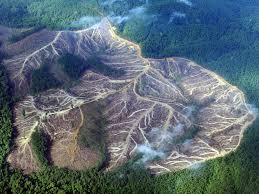
10. A good majority of the world's trees have been cut down, destroying the habitats of billions of creatures world-wide, while at the same time damaging the environment. One of the most catastrophic deforestation sites is the Amazon Rain Forest. During the past 40 years, about 20% of the Amazon has been cut down and destroyed. The Amazon is referred to as the "Lungs of America" since it is a major air purifier for most of Central America and the U.S. By cutting down the forest, we are destroying the home of millions of creatures, severely damaging the environment, and also hurting ourselves.
Solution: This of course sounds cliche, but we need to raise a lot more awareness of the situation down there. Logging companies located there are constantly breaking regulations set to restrict them from cutting too many trees. There is law enforcement there, but they cannot watch every company constantly. So we would also need to increase funding for law enforcement organizations there.
Solution: If we can increase the amount of water purification straws and water filters being sent over there, we may be able to ease this problem long enough for us to find a more solid solution. One way to increase the amount of these water purifiers sent over to these countries is through charitable and monetary donations from countries like the U.S., Great Britain, Germany, etc.
2. Textile factories in India, Indonesia, China, Vietnam, and Thailand have very poor working conditions, and workers are often working under life threatening conditions. Though the workers may lose their lives working in some of these factories, they work there because they need the money to provide for their families. Most, if not all, of these factories are powered using diesel generators. These generators require a massive amount of fuel to keep them running, which of course costs a lot of money. These machines also have a habit of breaking and malfunctioning, meaning they require a lot of maintenance, which in turn costs even more money. Also, if one or more of these generators breaks down, the other generators must work harder to keep the factory running, so the other generators require more fuel to power themselves; and this increased workload on the remaining generators will often lead to them breaking down. (This is the topic I did for a business ethics case, which is why I'm getting so in depth, I promise the other ones will be shorter.)
Solution: Though this solution seems to be unrelated to the issue at hand, it can lead to improved working conditions. If these factories were to get rid of diesel generators and install a solar energy system, the company running the factory would be able to utilize the money that is going to be saved and put it towards improving work conditions, and even possibly increasing the pay of the workers. Solar panels are expensive to install and set up. However, they pay themselves off quite fast since they are powered by solar energy (which is free) and they are also very low maintenance.
3. Members of ISIS have managed to travel to many countries. The TSA has been increasing the amount of random inspections at airports. Most of these inspections are focused towards Muslims and Arabs, which is not right, since many ISIS members are people from several countries around the world. Also, many Muslim people are fleeing the Middle East because of all the conflict going on there, so of course there are going to be many more Muslims and Arabs at airports.
Solution: Instead of increasing the number of random inspections at the security gates (which studies have proven that about 95% of potential threats have gone unnoticed during inspections), the TSA should put more of their time and effort into conducting more thorough background checks on people.
4. We cannot deny that many people have a negative view towards the Islamic community due to recent terror attacks. Some people just lack the capacity to try and understand that these terror attacks are from extremists, and are not the celebrated by the entire Islamic population; on the contrary, Muslims view these attacks in the same way we do.
Solution: There is not really a tangible solution for this problem because it involves enlightening people and changing whatever bias view they have, and like I said before, some people just don't have the capability or desire to expand their views. However, we can try our best to bring people together by hosting events aimed towards understanding the situation over in the Middle East.
5. The world supply of fossil fuels is running low. According to an article from business-standard.com, we only have about 53 years left of fossil fuels in the world (www.business-standard.com/article/punditry/, Singh 2015). What will we do after we run out of our primary energy resource?
Solution: We already have many other viable options: Solar power, wind power, water power, there is even research being done to harness the energy from lightning (which if we were able to find a way to do this, we would most definitely be set). As of right now, solar energy is the prominent form of clean, reusable energy being used around the world, but if we put more effort and research into discovering more effective ways of instilling this source of energy, as well as other forms, we would most definitely find a solution to our energy crisis well before our 53 years are up.
6. Over recent years, there has been am increase in the homeless population, specifically here in the U.S. Most people are losing their jobs because of advances in technology. An older example would be telephone operators. Now, delivery truck drivers may see an end of employment if these delivery drones are utilized (though it may be several years before 100% of deliveries are made by drone transportation). Also, there are more people in the world than there are jobs available.
Solution: It's practically impossible to fix overpopulation, so let's just not even go down that road. It is also difficult to stop advances in technology, because that is what we as humans do, we look for ways to improve. But perhaps we can look for ways to improve the way people do things instead of replacing them with machines. For example, maybe we can find a new and improved form of delivery that delivery truck drivers could work.
7. Recently, there has been a massive influx of Syrian immigrants to many European countries and the U.S. They are immigrating by the hundreds of thousands. But of course when they move to these countries, there is no where near enough room for them to live comfortably. They are living in immigrant camps, and the living conditions, as you can imagine, are not the best. Food is scarcely rationed throughout the camps. This sharp increase in a country's population also impacts the people already living in that country. On top of all of that, the governments must conduct background checks in order to ensure that these immigrants are not linked to any terrorist organizations.
Solution: It is pretty difficult to find an effective solution for this issue, these people are fleeing for their lives because of the conflict going on in their home country, so we can't just tell them to muscle through it. One thing that could be done is setting up stations for these immigrants to travel to, in which they will be given a list of countries that they can immigrate to. This could be an effective way for the immigrants to be more evenly dispersed across the world, instead of focusing on just a few countries for them to go to.
8. Pollution is a major environmental problem facing the world. The exhaust from trucks and cars, the pollution from factories and airplanes, the burning of fossil fuels, all of these are destroying the environment
Solution: This solution coincides with one of my previous solutions for problem number 5. We can start be putting more effort into finding an effective way to instill clean and renewable energy as our primary source of energy. If we can take this major step towards improvement, the only thing left to do is try our best to clean up our remaining mess of litter, and water/air pollution.
9. The population of bees is rapidly declining. New pesticides being sprayed to keep the beetles off of your roses, or to prevent the leaves of trees from being munched away at are also killing off the bees which we rely so heavily on to pollinate our flowers and make us their sweet honey.
Solution: The solution is both simple and complicated. We can stop using pesticides all together, but we do rely on pesticides for keeping our crops safe. We can also divert more time and money into the research of a pesticide that is not just more bee-friendly, but more environmentally friendly as well. This is easier said than done, but this topic of the declining bee population is often over-looked, and in turn under-funded.
10. A good majority of the world's trees have been cut down, destroying the habitats of billions of creatures world-wide, while at the same time damaging the environment. One of the most catastrophic deforestation sites is the Amazon Rain Forest. During the past 40 years, about 20% of the Amazon has been cut down and destroyed. The Amazon is referred to as the "Lungs of America" since it is a major air purifier for most of Central America and the U.S. By cutting down the forest, we are destroying the home of millions of creatures, severely damaging the environment, and also hurting ourselves.
Solution: This of course sounds cliche, but we need to raise a lot more awareness of the situation down there. Logging companies located there are constantly breaking regulations set to restrict them from cutting too many trees. There is law enforcement there, but they cannot watch every company constantly. So we would also need to increase funding for law enforcement organizations there.
Subscribe to:
Posts (Atom)